
A Couple’s Duet of Love & Lust
Play A Couple’s Duet of Love & Lust
A Couple’s Duet of Love & Lust Screenshots
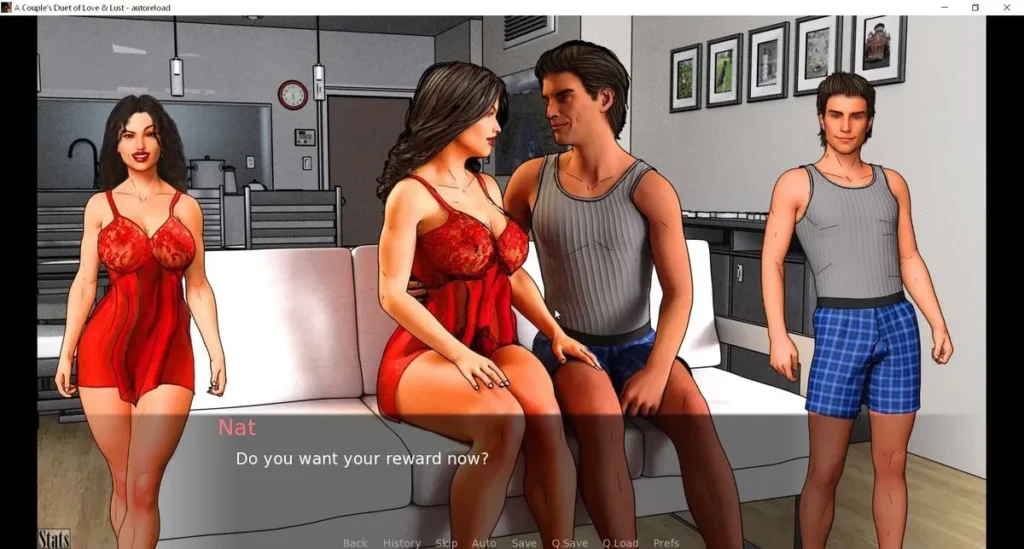



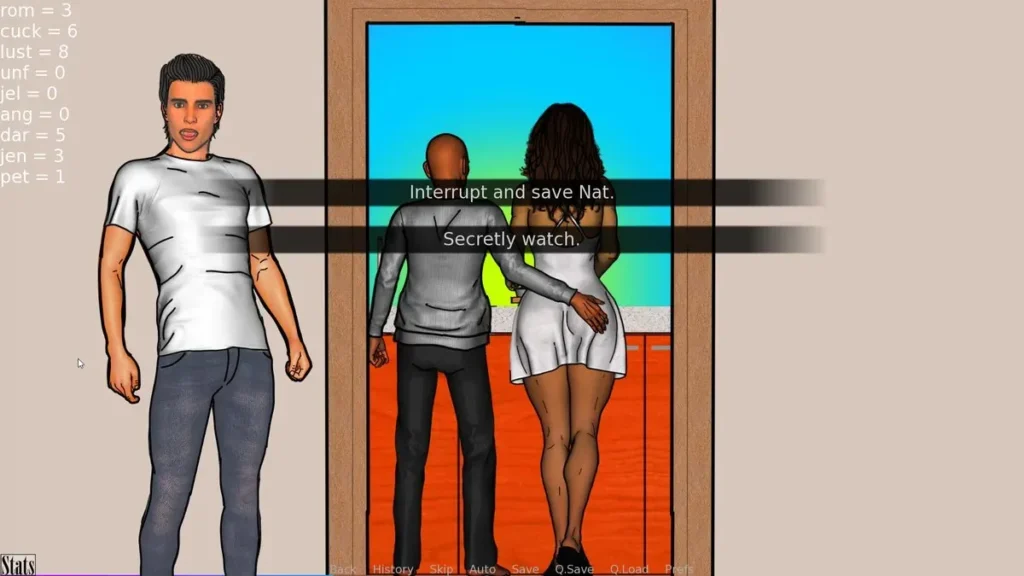








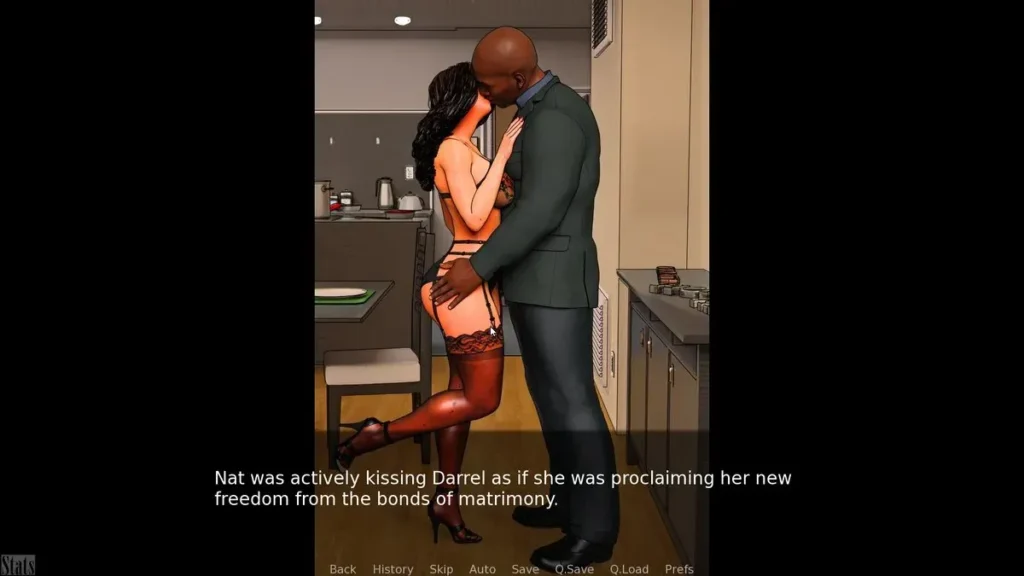






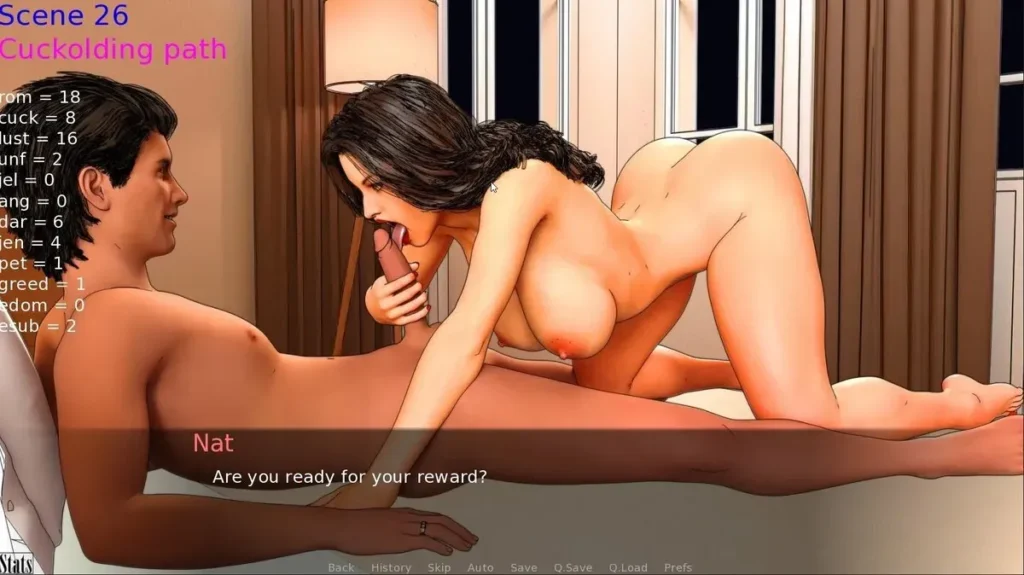





A Couple’s Duet of Love & Lust review
Explore gameplay mechanics, storyline choices, and relationship dynamics in this interactive narrative experience
A Couple’s Duet of Love & Lust stands out as an interactive narrative game that places relationship dynamics at the center of its gameplay experience. This game combines choice-driven storytelling with relationship stat systems, allowing players to navigate complex scenarios involving multiple characters and branching narrative paths. Whether you’re new to narrative-driven games or seeking to understand the mechanics that make this title unique, this guide covers everything from basic gameplay fundamentals to advanced strategy for unlocking different story outcomes and character interactions.
Understanding the Core Gameplay Mechanics
Ever find yourself playing an interactive story, tapping through dialogue, and wondering if your choices actually matter? 🤔 I’ve been there. You pick a flirty line, hoping for a spark, and the character just gives you a polite smile before the story marches rigidly on. It can feel like you’re just a passenger. Well, let me tell you, A Couple’s Duet of Love & Lust is a whole different ballgame. Its A Couple’s Duet gameplay mechanics are designed to make you feel like the composer of your own romantic (and lustful) symphony, where every single note you play alters the harmony.
At its heart, this isn’t just a story you read; it’s a world you shape through a delicate dance of words and emotions. Your success isn’t measured in health bars or experience points, but in the subtle shifts of a glance, the warmth of a touch, and the complex web of relationships you nurture or neglect. Understanding how to navigate this system is the key to unlocking the game’s deepest, most personal stories. So, let’s pull back the curtain and explore the instruments you’ll be playing.
How the Relationship Stat System Works
Forget good or bad endings. In A Couple’s Duet, your journey is defined by a spectrum of emotions and dynamics, all silently quantified by a sophisticated relationship stat system. This is the game’s beating heart, the invisible ledger where every interaction is logged. Think of it less like a scoreboard and more like a character’s private diary of their feelings toward you, written in numbers.
You won’t see these stats flashing on screen during every conversation—that would ruin the magic! Instead, the game internalizes them, letting the changes manifest naturally in how characters speak to you, what opportunities they offer, and even their body language in future scenes. The system tracks multiple independent metrics simultaneously. Building romance with Nat doesn’t automatically lower your jealousy score with Darnell; each stat exists in its own space, creating beautifully messy, human contradictions.
The real mastery comes from understanding what each stat influences. Pumping all your effort into one area might get you a steamy scene, but could leave an emotional connection feeling hollow. The game challenges you to think about what kind of relationship you truly want to build. Do you want a partnership built on passionate lust and playful competition, or one rooted in deep romance and vulnerable emotional submission? The character relationship tracking is so precise that you can craft something uniquely in-between.
Here’s a breakdown of the key emotional currencies you’ll be managing:
| Stat Category | What It Represents | Gameplay Influence |
|---|---|---|
| Romance | Deep emotional connection, affection, and traditional romantic investment. The “heart” of a relationship. | Unlocks more intimate, tender dialogue options and scenes. High romance often leads to committed relationship paths and emotional confessions. It’s foundational for long-term partnership endings. |
| Lust | Raw physical attraction and desire. The spark of immediate, passionate chemistry. | Opens up options for more provocative flirting and physically intimate encounters. High lust can accelerate physical stages of a relationship but doesn’t guarantee emotional depth on its own. |
| Jealousy | Possessiveness and rivalry. Feelings sparked by you paying attention to other potential love interests. | Can lead to dramatic confrontations, tense scenes, and make-or-break moments. Moderately managed, it can spice up a dynamic; unchecked, it can lead to explosive fallout and closed paths. |
| Emotional Submission | Willingness to be vulnerable, to yield control, and to trust deeply within the dynamic. | Critical for unlocking a character’s most guarded secrets and fears. High levels allow for moments of profound emotional support and can define the power balance in the relationship. |
| Trust (Underlying Stat) | The foundational belief in your reliability and honesty. Often affected by choices outside of direct romance. | Impacts everything. Low trust can block the progression of other stats, no matter how high your romance or lust is. It’s the glue that holds the other dynamics together. |
My first playthrough was a mess because I ignored this system! 😅 I treated every conversation with Darnell like a flirtation battle, maxing out lust and rivalry. Sure, we had some fiery encounters, but when a moment arrived for a real, vulnerable conversation, the option simply wasn’t there. The game had logically determined that based on our history, I hadn’t built the emotional submission or trust needed for him to open up. It was a brilliant, heartbreaking lesson: the game was listening, and my character relationship tracking had painted me into a corner. To progress in A Couple’s Duet, you must learn to read between the lines of every interaction.
Choice-Based Narrative Branching and Consequences
This is where the magic of A Couple’s Duet truly comes alive. The choice-based narrative branching isn’t about picking “Option A: Be Nice” or “Option B: Be a Jerk.” It’s about nuance. Every decision, from a seemingly throwaway joke to a major moral crossroads, feeds into the stat system we just discussed. And that system, in turn, dictates which branches of the story’s massive narrative tree you get to explore.
The game is a masterclass in story consequences and outcomes. It employs a “memory” system that recalls your choices chapters later. That comforting lie you told Ethan in Episode 2? It might resurface in Episode 6 when he’s questioning your honesty during a crisis. The choice-based narrative structure means there is no single “canon” story. There are dozens of variations, each feeling uniquely tailored because they are—tailored by you.
Pro Tip: Don’t save-scum during your first playthrough! The weight of your decisions, and sometimes the regret, is part of the authentic experience. Live with your choices and see where they lead you; you’ll uncover a more genuine story.
Let me give you a concrete example from early in the game. You’re at a party with your partner and friends. Nat pulls you aside, slightly upset, and confides about a work problem. Here are your core options:
- “Let’s talk about it over a drink. I’m all ears.” (Focused, empathetic)
- “Everyone’s having fun! Don’t stress, just dance it off with me!” (Playful, dismissive)
- “Maybe Darnell can help? He’s good at this stuff.” (Deferential, redirecting)
Seems simple, right? But watch how this single moment branches:
- Choosing Option 1 boosts your Romance and Emotional Submission with Nat. It signals you’re a reliable emotional anchor. Later, Nat will remember this, seeking you out for deeper support during a major family crisis—a entire heartfelt story branch that wouldn’t exist otherwise.
- Choosing Option 2 slightly increases Lust (playful chemistry) but lowers Emotional Submission with Nat. It also triggers a Jealousy check from your partner watching across the room. This could lead to a playful, flirtatious argument later (one branch) or, if jealousy is already high, a serious fight about your attentiveness (a different, more dramatic branch).
- Choosing Option 3 might increase Jealousy in Darnell (he sees you pushing Nat toward him) and slightly lowers Trust with Nat (you pushed her away). This could later make Darnell more possessive in a group scenario and make Nat hesitate before sharing a crucial secret with you, potentially locking you out of a key piece of the plot.
See how that works? 🤯 One dialogue choice isn’t just about the immediate reaction; it’s a seed that grows into a narrative tree. This is the essence of how to progress in A Couple’s Duet—by understanding that progression isn’t linear. You’re not walking down a hallway and choosing which doors to open. You’re in a garden, and every choice is a seed that determines what flowers—or thorns—will sprout around the next bend.
Character Interaction Mechanics and Dialogue Trees
Now that we know why choices matter, let’s look at how we make them. The character interaction mechanics in A Couple’s Duet are your primary toolset. Communicating with Darnell, Nat, Ethan, and others isn’t just about picking pre-scripted lines; it’s about navigating a dynamic personality. Each character has their own history, insecurities, and desires, and the game’s brilliant dialogue tree options are designed to reflect that.
The dialogue interface is beautifully clear, but the implications are deep. You’re often presented with 3-4 response paths, each tagged (sometimes subtly) with a tone or intent: [Flirtatious], [Protective], [Logical], [Deflect]. These aren’t just flavor; they are direct pipelines to the relationship stat system. Choosing a [Playful Challenge] with Darnell might feed Lust and Jealousy, while a [Genuine Compliment] would feed Romance and Trust.
But here’s the kicker: the dialogue tree options available to you are conditional. They depend entirely on your history with that character. If you’ve consistently been sarcastic and distant with Ethan, the option to give him a heartfelt, supportive speech later simply won’t appear. The tree has been pruned by your past actions. Conversely, if you’ve built high Emotional Submission with Nat, you might unlock a special, deeply vulnerable response choice that can radically alter a scene.
Let’s break down an interaction with Darnell, who often communicates through competitive banter:
* Standard Options (Available to all): [Banter Back], [Ignore the Jab], [Change Subject].
* Unlocked Option (High Lust/Jealousy): [Raise the Stakes with a Provocative Bet]. This could lead to a private, intense scene that advances a passionate path.
* Unlocked Option (High Romance/Trust): [Drop the Act and Ask if He’s Okay]. This sees through his facade and can pivot the entire conversation to a moment of unexpected tenderness, opening a new emotional branch.
The character interaction mechanics extend beyond pure dialogue. Your choices during key events—like who to sit with, who to defend in an argument, or even who to text first—are all parsed through the same stat-based logic. These silent choices are just as powerful as spoken words.
My greatest “aha!” moment came during a second playthrough. I was meticulously building romance with Nat, avoiding any jealousy-inducing choices. When a scene arrived where Darnell was provocatively teasing me, my usual [Flirtatious Retort] option was gone. In its place was a new one: [Remain Loyally Focused on Nat]. The game knew my statistical commitment and adjusted my available personality in the moment to reflect it. It was no longer me, the player, deciding who to be; the game was reflecting back the consistent character I had built. That level of integrated character relationship tracking is what makes this narrative experience feel less like a game and more like living a life.
Mastering these A Couple’s Duet gameplay mechanics is your ticket to a truly personalized story. It asks you to be thoughtful, to be consistent (or delightfully inconsistent!), and to embrace the story consequences and outcomes of your digital heart. So go ahead, dive in. Be brave with your choices, pay attention to the emotional undercurrents, and see what kind of duet you can compose. The orchestra is waiting for your cue. 🎭❤️🎶
A Couple’s Duet of Love & Lust delivers a complex, choice-driven experience where every decision shapes your narrative journey. By understanding the relationship stat system, mastering the dialogue tree mechanics, and strategically pursuing different character paths, you can unlock the full range of storylines and intimate scenarios the game offers. Whether you’re interested in exploring monogamous relationships, open dynamics, or specific character-focused narratives, the game’s branching structure ensures that your playthrough reflects your choices and preferences. Take time to experiment with different dialogue options, pay attention to how your decisions affect relationship statistics, and don’t hesitate to replay sections to explore alternative paths. The depth of A Couple’s Duet lies in its willingness to honor player agency, making each playthrough a unique experience shaped by your decisions and relationship priorities.